Over time, instruments will wear, causing them not to run as smoothly or report results as accurately. Within this, part of the instruments can be replaced with new or refurbished spare parts, preventing downtime and keeping them working effectively.
Target Analysis’ repair services for GCs, HPLCs, mass spectrometers, and other lab instruments include warranty coverage, service agreements, and preventative maintenance. Whether you are seeking instrument repair or scheduling a service call for lab equipment repair.
Our experienced technicians will quickly restore your pump to top performance – regardless of its age. We offer comprehensive on-site support for vacuum components and systems, troubleshooting, maintenance, and repairs.
Target Analysis IQ/OQ/PQ procedures strictly follow good laboratory practices (GLP), which require that all laboratory instrumentation be inspected, cleaned, and maintained. We provide an independent and comprehensive testing service for Mass Spectrometry & Chromatography instruments to help you meet your regulatory and operational requirements and standards.
The philosophy behind our services is that we can support all the scientific instruments that we sell. Our technical department is trained and certified to offer a complete system service across multiple brands and models, including Mass Spectrometers (MS), Liquid Chromatographs (LC), Gas Chromatographs (GC), Autosamplers, Detectors & Peripherals
Remote support provides additional service through remote software to resolve instrument issues before a technician is dispatched. Our remote support team works with you via phone and software to remotely control your system to troubleshoot, repair or assist. This additional level of support allows for faster resolution of issues and ultimately reduces instrument downtime.
Application support is a service provided by our team that gives you a strategy and technique to quickly and confidently develop high-quality methods. You will learn a proven technique that will guide you step-by-step through the process of method development, applying principles that will make the process more efficient. Application support can take the form of a course, training, or development of an analytical method based on your real samples.
Omics technologies adopt a holistic view of the molecules that make up a cell, tissue, or organism. Target Analysis can provide unique solutions for bioinformatics services for proteomics and metabolomics workflows. Based on our experienced team members, we can readily meet the rigorous demands of various fields, such as life sciences, nutrition research, etc.
Customized training solutions from sample preparation to data analysis. Specially designed courses to meet today’s ever-increasing demands for analytical performance, productivity and ease of use!
Target Analysis was founded in 2013 by a team of experienced scientists and engineers.
Through the trust of our customers and partners, Target Analysis has managed to create a team with experienced and trained staff, which undertakes the installation of instruments, staff training, and after-sales support with spare parts, consumables, and certified reference materials. The company’s know-how is constantly expanding and is ready to take on any challenge to solve your analysis issues.
See how our customers are using Target Analysis’ products to transform their research and ultimately make discoveries that help change the way we see the future.
MALDI-2: Bringing enhanced Sensitivity and Dimensionality
Today Bruker is pioneering the migration of technology from research to commercial laboratory.
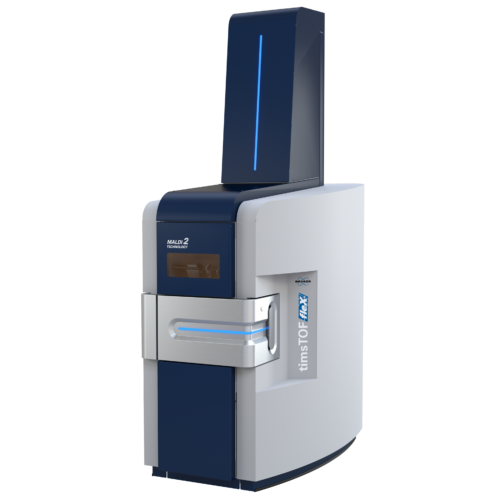
timsTOF fleX is now available with the innovative and powerful MALDI-2 technology option. This post-ionization technique leads to both a significant boost in ion yields and reduction in ion suppression effects, resulting in a signal increase of up to 1-3 orders of magnitude compared to traditional MALDI experiments.
MALDI-2| post-ionization reduces ion suppression effects and improves sensitivity by orders of magnitude
High spatial resolution below 10 µm results
Combining MALDI-2 post-ionization with microGRID enabled high spatial resolution opens the field for the analysis of the smallest unit of eukaryotic life – single cells.
MALDI-2 post-ionization enhances the sensitivity detecting even the finest molecular distributions.
Advanced Omics analyses with high sensitive MALDI operation.
By just one click in the software the user will be able to change between post-ionization and traditional MALDI mode. This is done in seconds!
Direct comparison of the two different ionization processes.
Innovative and powerful MALDI-2 technology option.
Signal increase of up to 1-3 orders of magnitude compared to traditional MALDI experiments
More than double the number of molecules detected per pixel
TIMSTOF FLEX MALDI-2
Highlights
Sensitivity
MALDI-2 increases sensitivity by up to 1-3 orders of magnitude depending on sample, analyte and matrix.
Dimensionality
MALDI-2 ionizes a wider range of chemical classes by reducing ion suppression effects, expanding chemical range for targeted analytes in MALDI Imaging.
Important Features to Consider
A second laser is available for post-ionization
The overall low ion yield and sensitivity issues due to ion suppression, using traditional MALDI, make the imaging analysis of samples sometimes very challenging. Our answer to these problems is MALDI-2. The post-ionization technique reduces ion suppression effects and improves sensitivity by orders of magnitude.
After the initial MALDI process, a second laser, sitting parallel to the sample surface, fires into the evolving plume and post-ionizes neutral (mainly matrix) molecules. A charge transfer from post-ionized matrix molecules to neutral analyte molecules leads to an amazing sensitivity gain for many analytes.
MALDI-2 and microGRID – A powerful combination making the possibility of sub-cellular imaging within reach
Complementing microGRID imaging with MALDI-2 post-ionization enhances the sensitivity detecting even the finest molecular distributions.
The need for uncompromising post-ionization has never been greater. High spatial resolution below 10 µm results in a drastically decrease of ablated and ionized sample material. MALDI-2 post-ionization compensates the lower sample amount per pixel, making even the finest molecular distributions visible.
Combining MALDI-2 post-ionization with microGRID enabled high spatial resolution opens the field for the analysis of the smallest unit of eukaryotic life – single cells. This unique combination makes the timsTOF fleX MALDI-2 the platform of choice for out of the box single cell imaging.
Analyze cell structures that are otherwise only visible with a microscope and obtain molecule-specific information with (sub)cellular resolution.
Post-ionization is easily accessible via software controlled solutions
The post-ionization laser is built as an add-on to the timsTOF fleX. All functions are exactly the same on the timsTOF fleX MALDI-2. This instrument is build on the latest timsTOF HT technology and combines the most advanced Omics analyses with high sensitive MALDI operation. No physical hardware changes are needed to activate post-ionization.
By just one click in the software the user will be able to change between post-ionization and traditional MALDI mode. This is done in seconds and allows for direct comparison of the two different ionization processes. You do not have to be a professional MALDI operator to use MALDI-2 as it is easy to handle and therefore also suitable for beginners.
Benefits
MALDI-2 increases sensitivity by orders of magnitude
timsTOF fleX is now available with the innovative and powerful MALDI-2 technology option.
This post-ionization technique leads to both a significant boost in ion yields and reduction in ion suppression effects, resulting in a signal increase of up to 1-3 orders of magnitude compared to traditional MALDI experiments.
For a MALDI Imaging experiment, this increased efficiency translates to more than double the number of molecules detected per pixel resulting in much improved physiological context.
Upregulated compounds in brain tissue
TIMS and MALDI-2: Deep Content Imaging for Omics Context
Omics studies involving small molecules desorbed from tissues sections such as lipidomics and metabolomics typically involve biomolecules from a wide variety of chemical classes. These studies benefit from MALDI-2 as the technique provides access to many more compounds, providing unique insight into nature’s complexity.
The combination of TIMS and MALDI-2 is uniquely powerful as richer ion yields from the post-ionization process produce mass spectra with higher information content. TIMS provides fast orthogonal separation that efficiently unravels these complex spectra where each m/z can contain many overlapping features. The result is not only the ability to extract information from single isobars, but also exact masses that have different ion mobilities. Collisional Cross Section (CCS) values are recorded for each one of the spectral components for comparison to databases or LC-MS results.
MetaboScape® MALDI-2 database
Bruker supplies all elements needed for performing successful MALDI-2 experiments from the necessary matrix and IntelliSlides® to expert application support and intuitive and user-friendly software solutions.
fleXmatrix® for MALDI-2
Especially developed for use with the timsTOF fleX MALDI-2 Able to remain stable under vacuum conditions MetaboScape® target lists
Target lists with MALDI-2 specific compounds available for different analyte classes and samples for automatic analyte annotation
Applications
MALDI-2: Leading the Pharma Tissue Model Revolution
A major limiting factor in modern drug development is use of the “well-stirred model” which homogenizes organs and tissues prior to analysis and quantitation with LC-MS studies. This approach is well-suited to providing exact amounts of drugs and metabolites within a target organ, but not readily compatible with pathology methods that seek to describe physiological effects of drug compounds. MALDI Imaging has made a significant impact towards the conversion of plasma
Drug imaging from dosed tissue (Chloroquine)
to tissue models by pinpointing the exact location of drugsand metabolites in tissue. MALDI-2 enhances molecular imaging for pharma studies by increasing overall sensitivity enabling quantitation for a wider range of dosing levels. Additionally, the increased variety of molecular classes seen by MALDI-2 expands the applicability of imaging to many more pharma projects that involve both xenobiotics and endogenous molecules.
MALDI-2 improves limits of detection for several analytes
A study comparing detection sensitivity from MALDI and MALDI-2. Dilution series or single dilutions of different analytes such as caffeine, prednisolone, estradiol, cortisol, doxorubicin, fluoxetin, kynurenine and paclitaxel were spotted onto liver homogenate and imaged with MALDI-2 on and off. Use of MALDI-2 clearly yields significantly higher sensitivity.
MALDI-2 boosts signal intensities for drug compounds that do not traditionally ionize with MALDI
Greatest flexibility and highest performance with a combined GC frontend and high-resolution MS system for confident ID of unknown compounds using complementary MS technology